
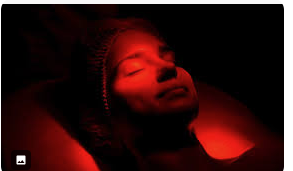
Red light therapy may help support sleep for some people, but usually indirectly, not as a sedative. The most consistent potential benefits relate to circadian rhythm signaling, reduced nighttime pain or inflammation, and nervous system calming — while timing, wavelength, and intensity play a major role. Used incorrectly, red light can feel neutral or even mildly stimulating.
Why This Question Matters for Sleep
Sleep problems are rarely caused by just one issue. Many people struggle with:
- difficulty falling asleep
- frequent nighttime waking
- pain or tension that worsens at night
- feeling “tired but wired”
Because light is one of the strongest regulators of the circadian rhythm, it’s natural to wonder whether red light therapy, which differs from blue or white light, could play a role in improving sleep quality.
At the same time, experiences vary widely — some people report better sleep, while others feel no effect or even mild stimulation. That inconsistency makes this topic confusing and worth unpacking carefully.
How Red Light Therapy Can Affect Sleep
Red light therapy does not act like a sleeping pill. Instead, any sleep-related benefits appear to come from physiological support mechanisms that influence sleep indirectly.
Circadian Rhythm Signaling
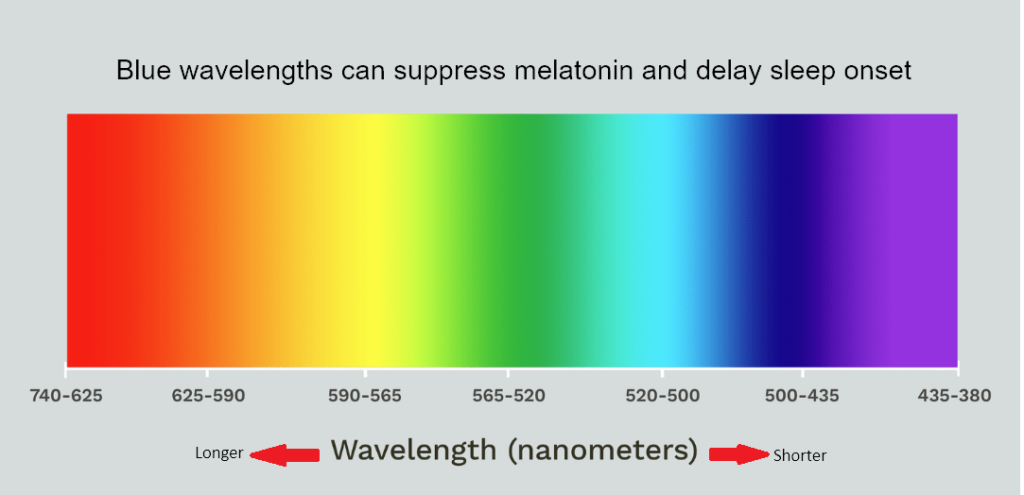
Short-wavelength light (especially blue light) suppresses melatonin and delays sleep onset. Longer wavelengths — including red and near-infrared — do not appear to suppress melatonin to the same degree, which is why red light is often considered more “sleep-friendly” in the evening.
Some researchers suggest that evening exposure to low-intensity red light may be less disruptive to circadian timing compared to brighter, shorter-wavelength light sources.
Pain and Inflammation Reduction
One of the more practical ways red light therapy may help sleep is by reducing pain or stiffness that interferes with rest. Photobiomodulation has been studied for its effects on inflammation, circulation, and tissue recovery, which can matter for people whose sleep is disrupted by:
- joint pain
- muscle tension
- chronic discomfort
Improving nighttime comfort alone can meaningfully improve sleep continuity.
Nervous System Effects
Red and near-infrared light may influence cellular energy production (mitochondrial activity), which in some contexts appears to support parasympathetic (rest-and-digest) nervous system tone. For some people, this may feel calming — though responses vary.
What the Research Suggests So Far
Direct clinical trials specifically testing red light therapy as a sleep treatment are limited. However, several related areas of research are relevant:
- Circadian research consistently shows that longer wavelengths are less disruptive to melatonin production than blue or white light.
- Photobiomodulation studies suggest red and near-infrared light can reduce inflammation and pain, which may indirectly support better sleep.
- Some small human and animal studies indicate potential benefits for recovery, relaxation, and autonomic balance — all of which can influence sleep quality.
Importantly, the evidence does not suggest that red light therapy directly induces sleep. Its role appears to be supportive, not primary.
What Helps vs What Can Backfire
When Red Light Therapy May Support Sleep
Red light therapy tends to be better tolerated when:
- used earlier in the evening rather than right before bed
- kept at moderate intensity
- focused on relaxation or recovery rather than stimulation
- paired with good sleep hygiene (dim lighting, consistent timing)
When It May Feel Stimulating Instead
Some people report feeling wired or alert when:
- sessions are too intense or too long
- light is used very late at night
- pulsed or high-output devices are used without adjustment
- individual sensitivity to light or stimulation is high
This variability is why red light therapy should be approached as an experiment, not a guaranteed solution.
Example of a Sleep-Friendly Setup
For people exploring red light therapy with sleep in mind, devices that allow control over wavelength, output, and pulsing can be helpful. For example, a panel like the RedRush 840 Pulse allows users to adjust settings, which can matter when trying to minimize overstimulation in the evening.
The specific device matters less than how and when it’s used.
Key Takeaways
- Red light therapy may support sleep indirectly, not as a sleep aid
- Timing, wavelength, and intensity matter more than raw power
- Benefits often come from reduced pain, improved comfort, or calmer physiology
- Individual responses vary widely
- Red light therapy works best as part of a broader sleep strategy
Where to Go Next
If you’re curious about using red light therapy safely in the evening, the next thing to understand is which wavelengths are most appropriate for sleep and which ones may be more stimulating.